What Is Geosteering?
2 minutes reading
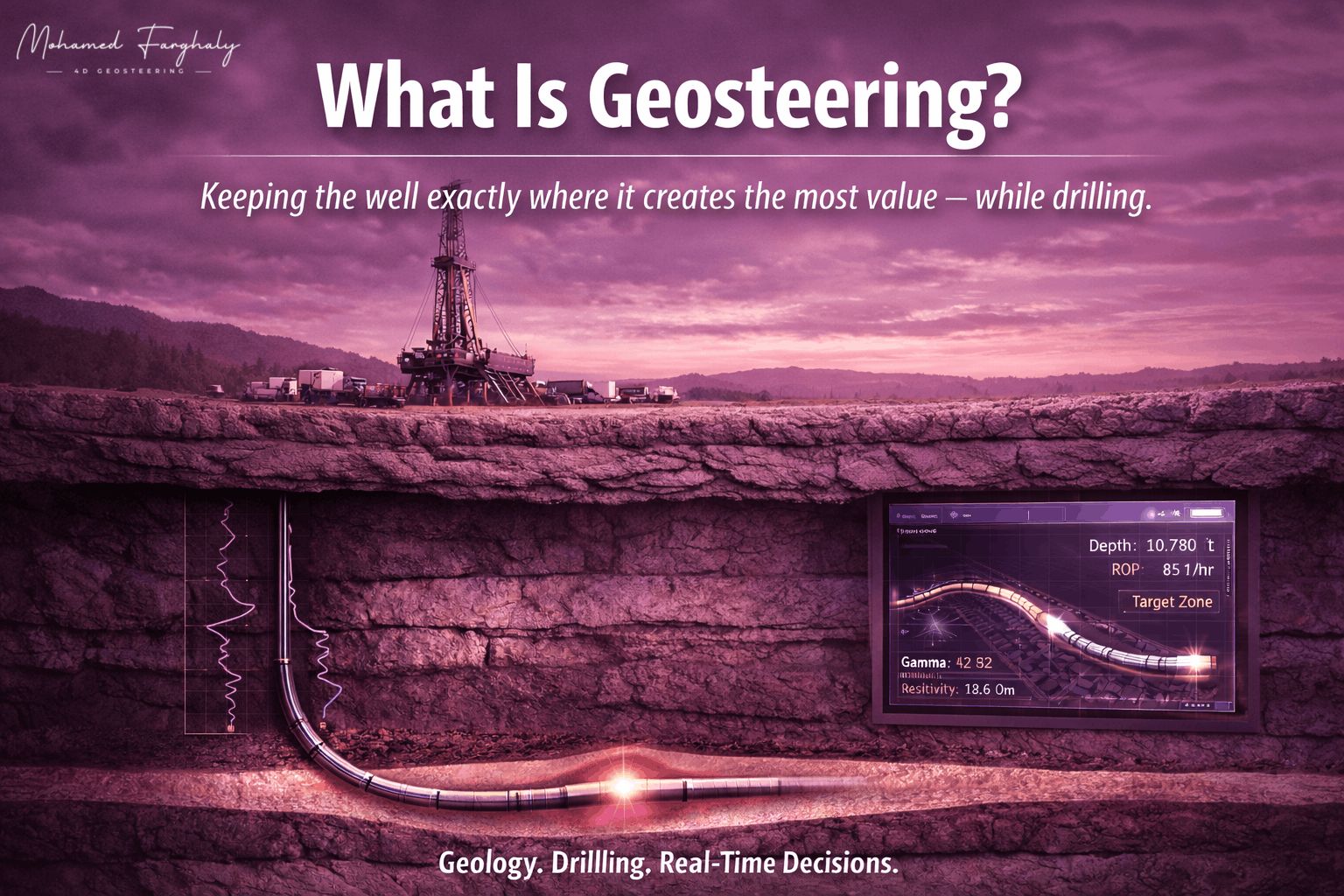
What is geosteering? A young engineer once asked me this question, wondering if it was just about adjusting the well path while drilling. It sounds simple on the surface, but the reality behind real-time reservoir navigation is far more complex.
This specialized practice became incredibly important when horizontal drilling completely changed the game. In traditional vertical wells, you only needed to hit the reservoir target once. In horizontal wells, however, you must stay inside the best part of the reservoir zone for thousands of feet. And sometimes that highly productive layer is only a few meters thick, leaving absolutely zero room for error.
That crucial role belongs to the geosteerer. This discipline combines geology, drilling engineering, and real-time logging data. It’s not just about reading logs; it’s about deeply understanding what the incoming data means and instantly deciding where the well should go next to maximize safety and efficiency.
In many horizontal wells, a difference of just a few feet up or down can affect overall well production significantly. That’s why precise borehole placement matters so much to asset economics.
Ultimately, mastering this process requires a deep commitment to continuous learning and cross-departmental communication. When subsurface geology and drilling engineering align perfectly through real-time navigation, asset teams can confidently unlock maximum production value from even the most challenging reservoirs. In simple terms, it is the vital work of keeping the well exactly where it creates the most value—while drilling.