Why Mudlogging Is One of the Strongest Paths into Geosteering
1 minute read time
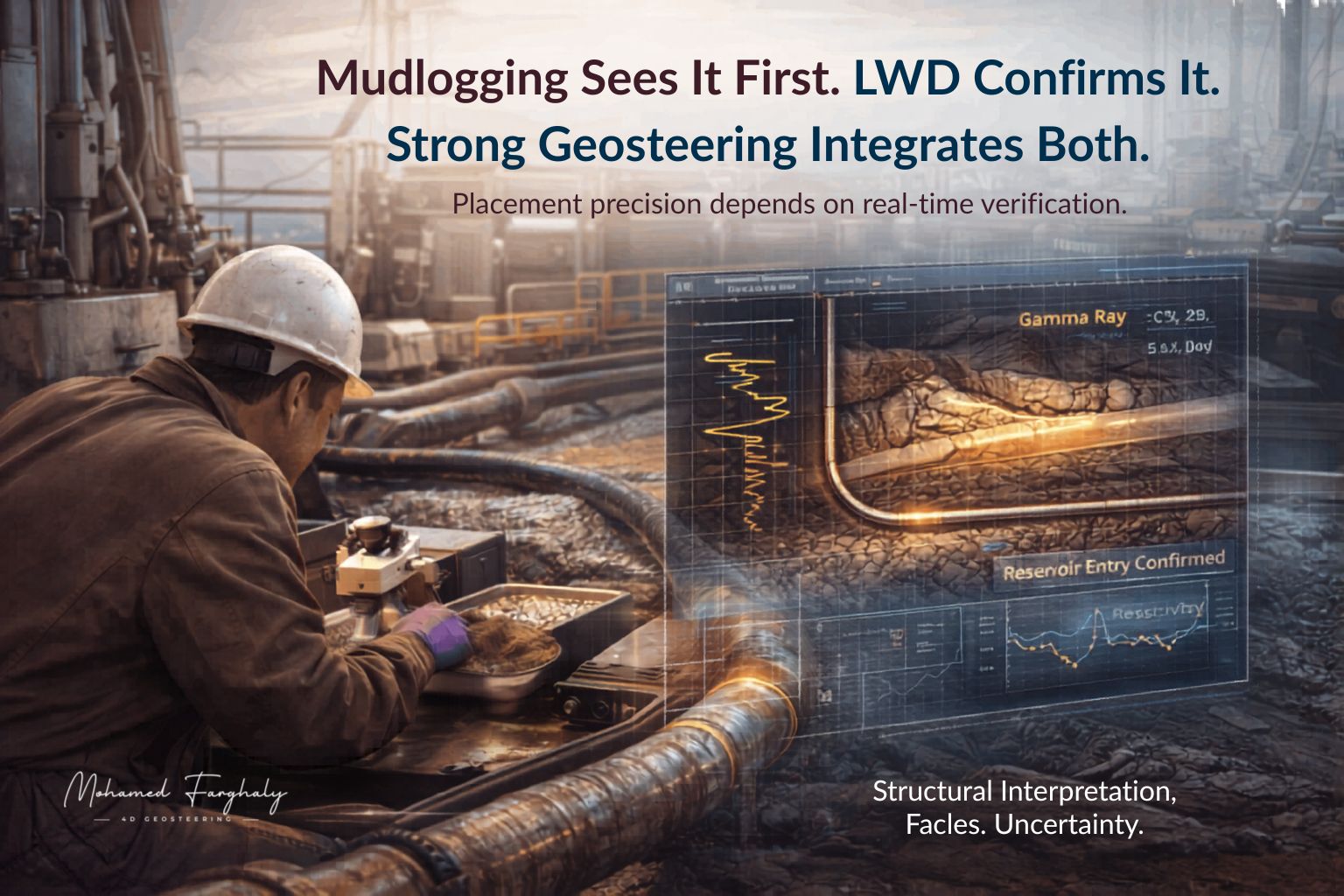
During a horizontal landing, the resistivity had not changed much, but the gas levels started rising and the cuttings showed a cleaner sand. The mudlogger noticed it first. A few minutes later, the logs confirmed reservoir entry. That sequence happens more often than people admit.

Mudlogging is often treated as secondary to LWD, but in reality, it is usually the first geological signal while drilling. Cuttings description, total gas and C1–C5 trends, ROP changes, drilling breaks, and background versus connection gas all provide early clues about formation changes. In thin reservoirs or complex facies, those early clues matter.

LWD provides measurements. Mudlogging provides context. A drop in Gamma Ray might suggest cleaner rock, but cuttings confirm whether it is truly sand or not. A gas increase may indicate hydrocarbons, or it may be operational. Mudlogging helps separate geological signal from noise.

During critical landings, this becomes even more important. Gas spikes can support reservoir entry, lithology changes confirm top picks, and drilling breaks strengthen interpretation. When mudlogging data aligns with LWD and the structural model, confidence increases and unnecessary trajectory corrections decrease.
Strong geosteering does not rely on one dataset. It integrates mudlogging, LWD, structural understanding, and drilling parameters. Ignoring mudlogging signals means ignoring part of the geological story.

In modern horizontal wells, placement precision determines value. Mudlogging is not just reporting. It is real-time geological verification.
In your experience, what is the most reliable mudlogging indicator during landing: gas trends, lithology changes, or drilling breaks?
If you want to move from observing the well to helping guide it, start building structural and trajectory knowledge now.
If this direction interests you, Follow my Linkedin profile for practical insights on Real-Time Geosteering and Well Placement