How can Well Site Geologist stand out in Geosteering
1 minute read time
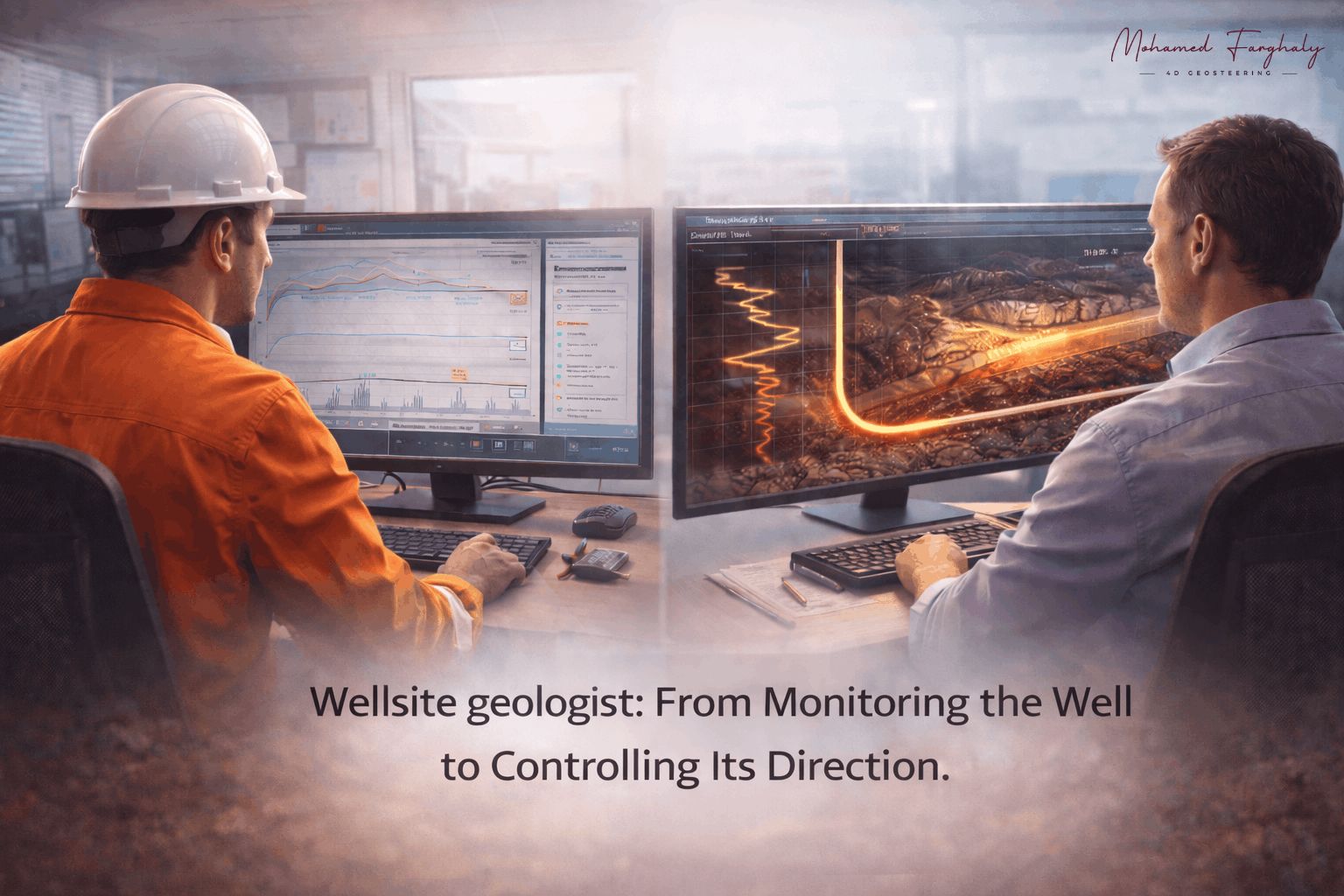
once met a professional who successfully transitioned from a wellsite geologist to geosteering, and they noted: ‘I used to monitor everything, but steering feels like another level.’ The truth is that your frontline experience already prepares you for that exact pressure.
You are used to real-time decisions, data validation, vendor coordination, and working under operational stress. You monitor Resistivity and Density shifts, gas changes, formation tops, and drilling breaks while the well is moving forward.
Geosteering uses that same environment, but with added structural responsibility. It requires understanding dip direction, reservoir thickness, and trajectory impact. It requires deciding how the well should move, not just observing where it is.
When a wellsite geologist adds structural modeling and trajectory strategy to real-time instinct, the transition becomes natural. The environment is already familiar. The responsibility just becomes larger.
Many strong geosteerers started at the wellsite. The difference is that they chose to deepen their structural understanding and take control of the well path.
If you are a wellsite geologist and want to move from monitoring the well to helping control its direction, start building your structural and trajectory skills now.
If you are a Wellsite Geologist and want to move from monitoring the well to helping control its direction, start building your structural and trajectory skills now.
Follow my Linkedin profile for practical guidance on stepping confidently into geosteering.