How LWD Engineers Become High-Value Geosteerers
1 minute read time
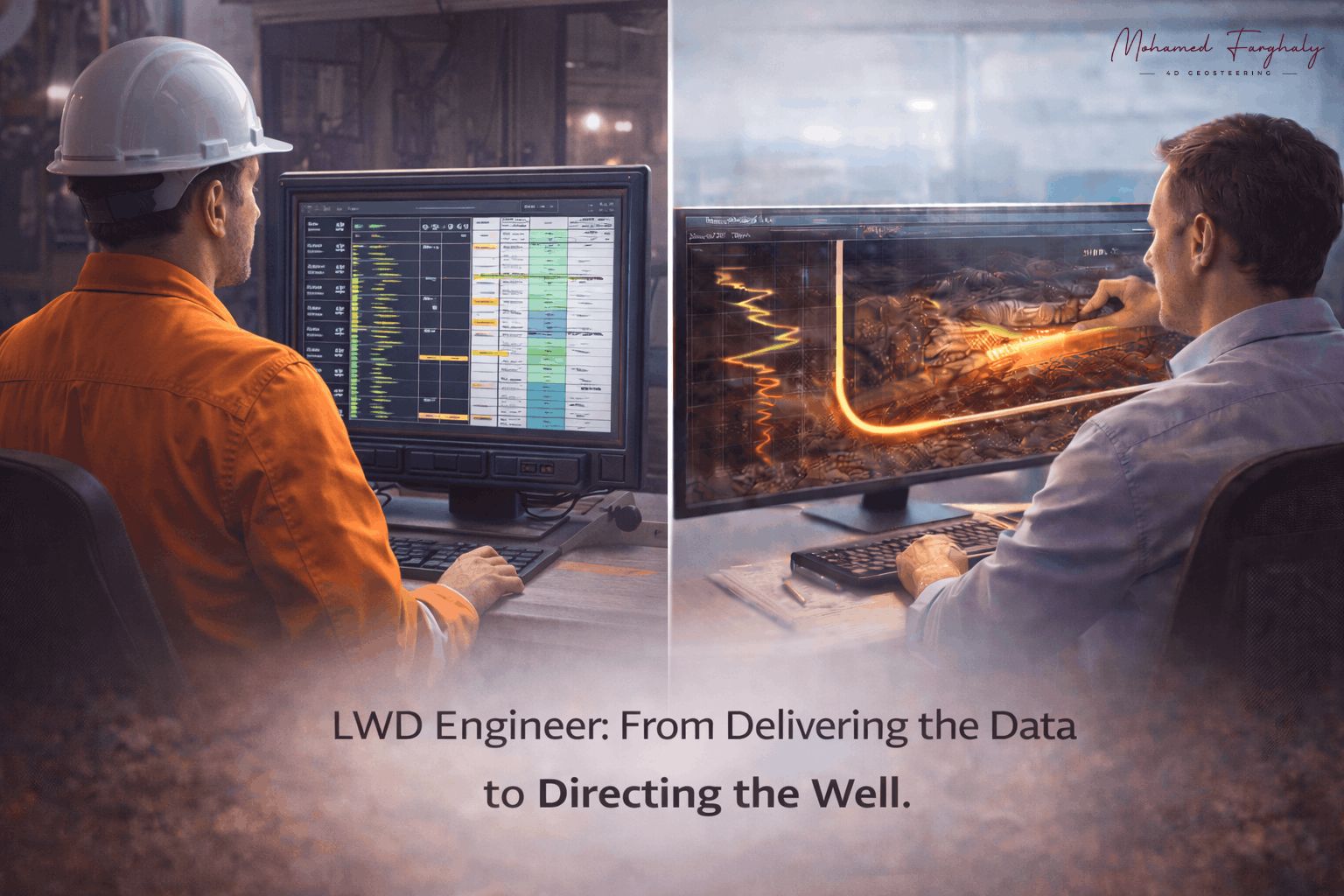
During a landing section on a horizontal well, the Gamma Ray looked clean, but the azimuthal resistivity started showing a boundary approaching from below. Navigating an LWD engineer to geosteering transition successfully means realizing that adjustments like this aren’t based on instinct, they are based on understanding what the tool is really saying.
If you are an LWD engineer, you already understand tool physics, measurement limits, azimuthal behavior, image quality, and the difference between signal noise and true formation response. You know when the data can be trusted and when it cannot. That knowledge is powerful.
Geosteering builds directly on that foundation. When you add structural dip interpretation, reservoir thickness awareness, and boundary prediction, you move from delivering measurements to interpreting reservoir position. Instead of explaining what the log shows, you start explaining what it means for the well path.
Modern wells require more than clean data. They require professionals who can connect measurements to structure and structure to trajectory. Many strong geosteerers started in LWD because they already owned the data. The next step is to own the interpretation.
If you want to expand from tool expert to well placement contributor, start building structural and steering knowledge now
Follow my Linkedin profile for practical insights on integrated Geosteering and Reservoir-Driven drilling decisions.