What Makes Some Wellsite Geologists Rise Faster in Geosteering
1 minute read time
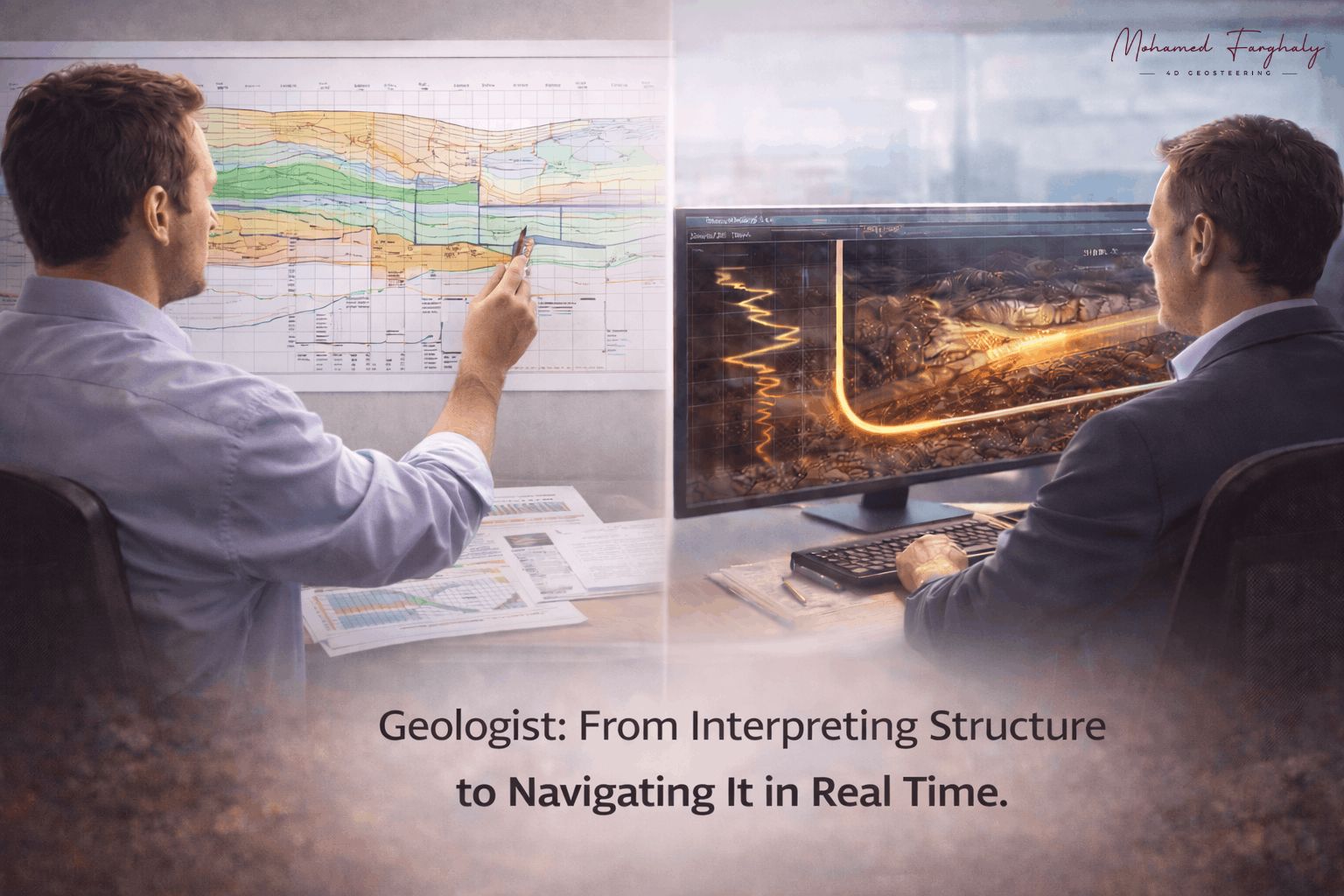
A geologist once told me, “I understand structure, but geosteering feels different.” I asked him a simple question: when you build a cross section, what are you really doing? You are predicting how layers move in space. That is exactly what geosteering is, just happening in real time.

As a geologist, you already think in stratigraphy, facies changes, structural trends, and reservoir architecture. You understand why a bed dips, how a fault shifts correlation, and how depositional changes affect log response. In geosteering, those same skills guide the wellbore.

The difference is speed. Instead of interpreting after drilling, you interpret while drilling. Instead of updating a model at the office, you decide whether to build, hold, or drop inclination in the moment.

Strong geosteering is not about reading Gamma Ray curves. It is about predicting what the structure will do next. If you can move from static interpretation to real-time decisions, you already have a strong advantage.

Geologists are not starting from zero in geosteering. They are closer than they think.

If you are a geologist and you want to move from interpreting structure on paper to navigating it in real time, start sharpening your structural thinking under operational pressure.
If you want to connect Geology with real-time well placement
Follow my Linkedin profile for practical insights on integrated geosteering and reservoir-focused drilling decisions