Why Directional Drilling Experience Fits Perfectly into Geosteering
2 minutes reading
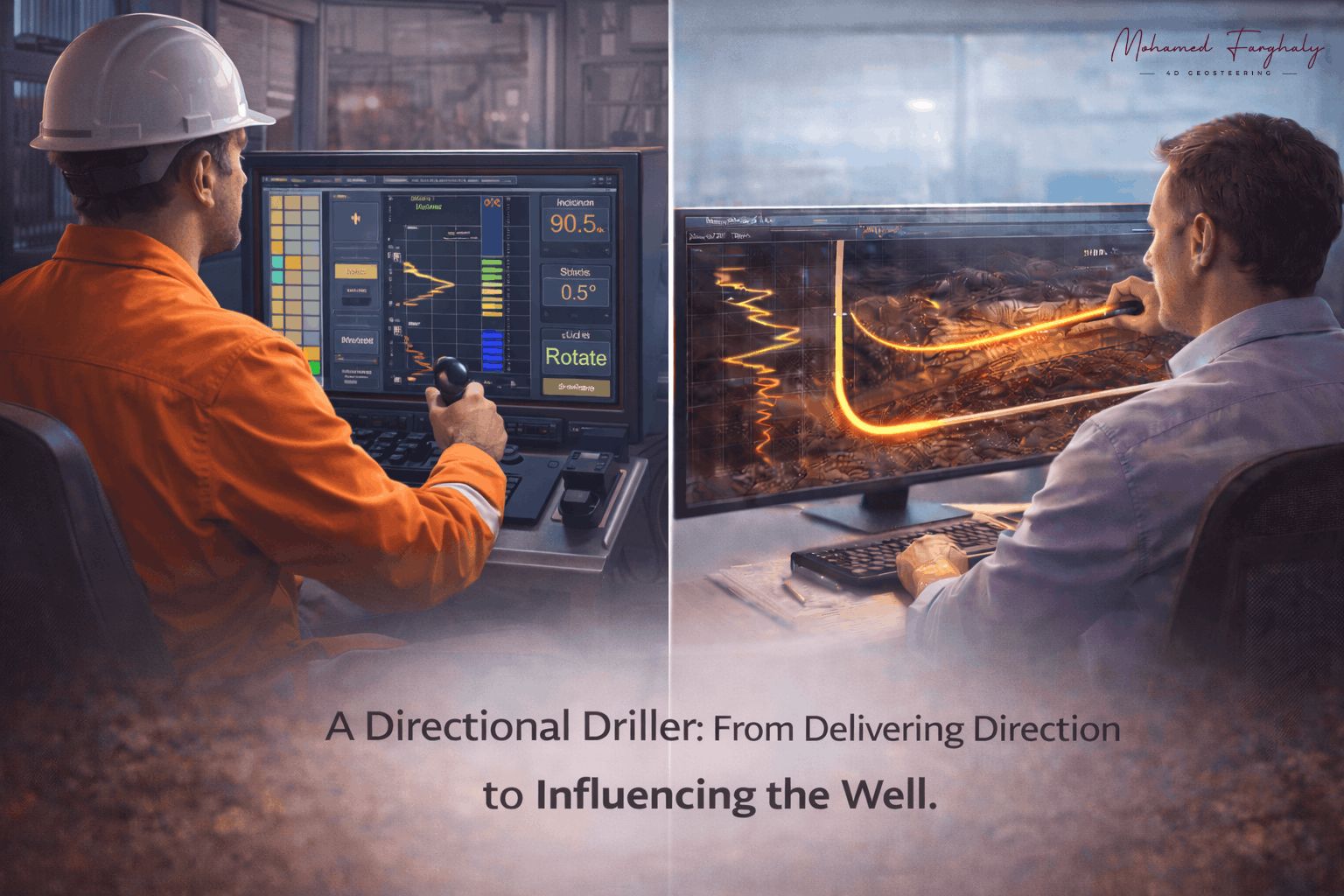
Gaining deep directional drilling experience is essential for any professional who wants to master geosteering because it bridges the gap between geological planning and mechanical reality. During a horizontal section, the structural model showed we were slightly cutting down in the reservoir. The instruction was simple: “Build 0.6°.” On paper, it looked minor. In reality, that adjustment would shift the well several feet vertically over the next few hundred feet. Whether that correction succeeded depended entirely on directional execution and the driller’s ability to manipulate the downhole tools effectively within the formation constraints.

This is why geosteering without directional drilling experience is only interpretation. You can have an accurate model, clean LWD data, and strong geological understanding, but if the trajectory cannot be executed precisely, the well will not stay in zone. Geosteering works as a two-part system. Geological interpretation defines where the well should go, while directional drilling makes it physically happen. When a build, hold, or drop command is given, it must respect toolface control, BHA limits, tool efficiency, formation hardness, dogleg severity, and torque and drag. These are not minor details. They determine whether the correction is realistic, timely, and safe for the BHA.

In horizontal wells, a one-degree change can move the well several feet vertically, which significantly impacts the final landing point and subsequent production. Excessive dogleg can affect completion efficiency, while delayed adjustments can reduce reservoir exposure. Steering decisions must be mechanically achievable, not only geologically correct. The best wells are drilled when both sides understand each other. When the geosteerer understands mechanical limits and the directional driller understands structural objectives, corrections become smoother and landings cleaner. That collaboration protects reservoir contact and well value, turning a standard drilling plan into a high-performance operation. By bridging the gap between subsurface interpretation and surface execution, experienced teams ensure that every meter drilled stays within the target formation. This practical integration remains the key to overcoming complex reservoir challenges and optimizing production results throughout the life of the well.

In your experience, what makes the strongest geosteering–directional partnership: communication, shared understanding, experience, or trust?
If you want to move from controlling direction to influencing destination, start learning the structural side of well placement.
Follow my Linkedin profile for practical insights on integrated geosteering and modern drilling collaboration.