Why Geosteering Is the Direction
June 25, 2026· 2 minute reading
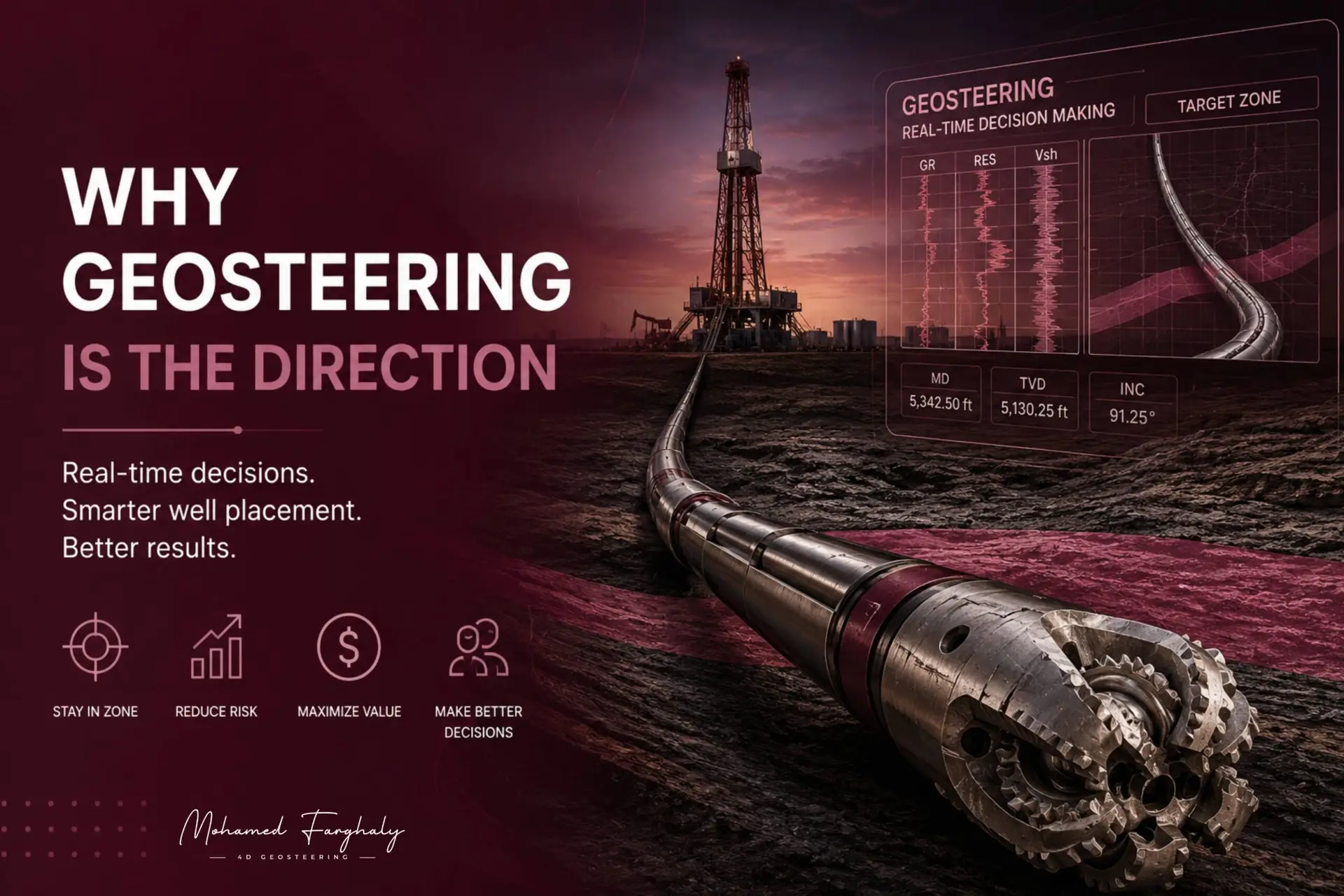
Why Geosteering Is the Direction for many oil and gas professionals is simple: the industry is moving from routine technical support to real-time well placement decisions.
For years, many field professionals worked close to the data but far from the final decision. Geologists, mud loggers, LWD engineers, MWD engineers, and wellsite teams supported drilling operations every day. However, the most important decisions often happened above them. They collected the data, described the formation, or monitored the tools, while someone else decided where the well should go.
Today, this gap is changing. Wells are more complex, targets are tighter, and every wrong move can affect cost, production, and reservoir contact. Therefore, companies need people who can understand the formation while drilling is still happening.
They need professionals who can read real-time data, compare it with the plan, and help decide whether the well should hold, build, drop, or change direction.
Why Geosteering Is Becoming a Career Direction
Geosteering is becoming more than a technical topic. It is becoming a career direction because it helps you move from only watching the operation to understanding how real well placement decisions are made.
Geosteering is not only about reading gamma ray, resistivity, or drilling parameters. These curves matter, but the real value comes from knowing what the data means in the moment. A change in log response may show that the well is moving toward a boundary. A mismatch between the plan and the actual well path may mean the structure is higher or lower than expected.
As a result, the question becomes: what should we do next?
This is where geosteering builds professional judgment. It connects geology, drilling, petrophysics, and reservoir thinking inside one live workflow. Instead of waiting until the well is finished, the team can react while there is still time to protect the target zone.
Who Can Benefit From Geosteering?
Why Geosteering Is the Direction also depends on your current role. For a mud logger, it can help move the work beyond surface descriptions. For an LWD or MWD engineer, it can connect measurements to geological decisions. For a geologist, petrophysicist, reservoir engineer, or petroleum engineer, it can show how well placement affects real value.
However, geosteering judgment does not come from theory alone. You build it by studying real wells, making decisions, reviewing your reasoning, and learning why one interpretation worked better than another.
Over time, this changes the way you think. You start to recognize patterns faster. You notice when the formation is not behaving as expected. Also, you understand when the well is moving away from the target.
Most importantly, you learn how to explain your decision clearly, because in real operations, a decision is only useful if the team can trust the reasoning behind it.
So, after understanding what geosteering is, the next question becomes clear: where can it take your career?
Related Topics
● Why Geological Thinking Is the Foundation of Geosteering
● Why LWD Experience Is One of the Strongest Foundations for Geosteering