Why Geological Thinking Is the Foundation of Geosteering
2 minutes reading
During a horizontal section, the Gamma Ray started to drop slightly. The first reaction in the room was positive. Clean carbonate, maybe better reservoir. But someone asked a different question: is this a facies change, or are we drifting structurally? That moment separates log watching from real geosteering.
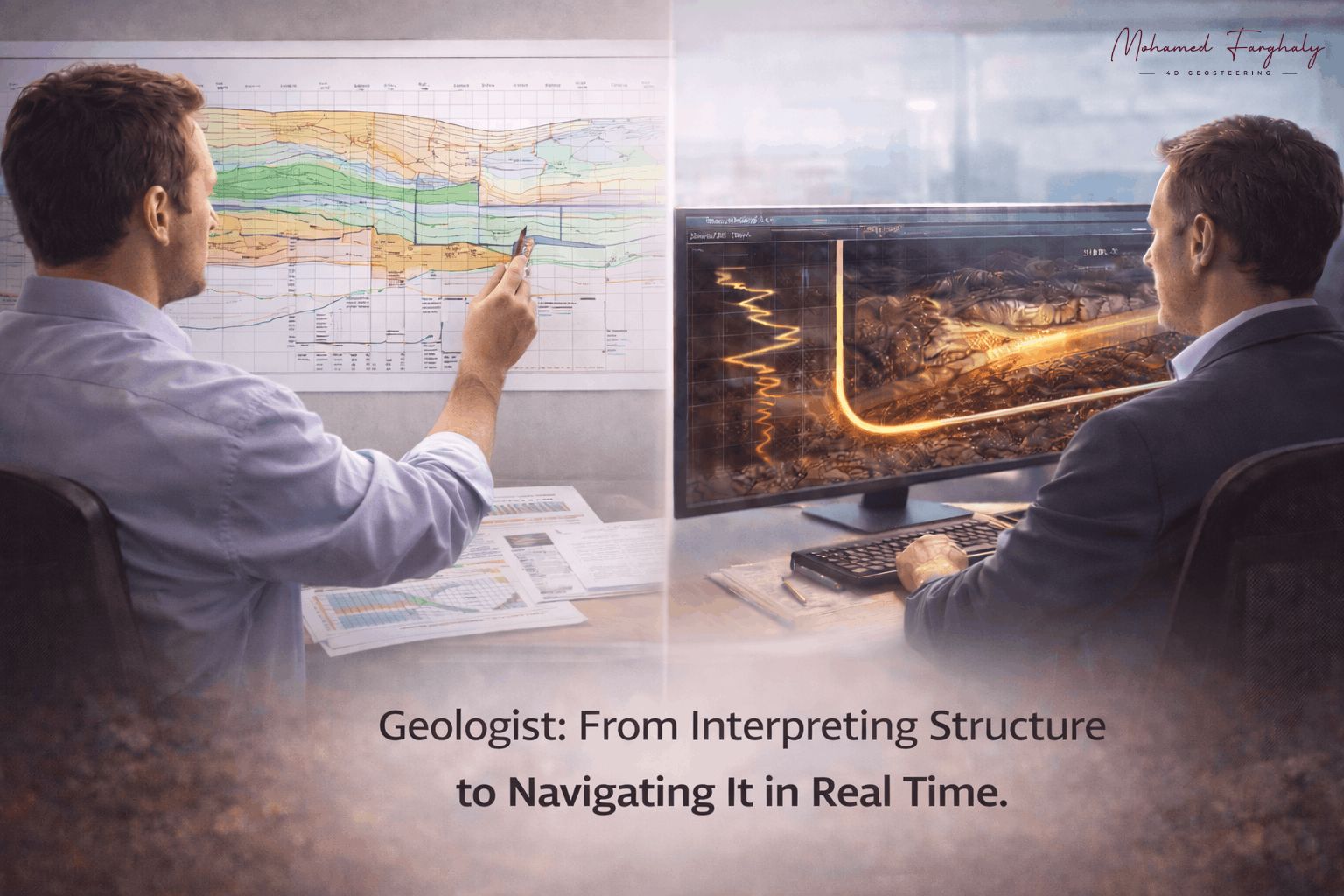
Geosteering is not about reacting to curves. It is applied geology happening in real time. Every steering decision depends on understanding structure, bed dip, faults, facies changes, reservoir thickness, and uncertainty. When logs shift, the real question is not what changed on the screen, but why it changed in the formation.
If the bed is dipping upward and you do not recognize it, the well slowly exits the target. If a fault offsets the structure and you treat it like a simple facies shift, you may correct in the wrong direction. Only geological thinking connects log response to structural reality.
Operations geology adds another layer. It brings context: well objectives, risk limits, drilling constraints, and communication between teams. Geosteering does not happen in isolation. It happens inside a live operation where every adjustment affects cost, time, and future production.
The difference between average and strong geosteering is prediction. Average steering reacts to logs. Strong steering anticipates structural movement, manages uncertainty, and aligns trajectory with reservoir strategy.
In modern horizontal wells, a few feet out of zone can reduce production, accelerate water breakthrough, or lower recovery factor. Geology in geosteering is not academic theory. It directly affects well value.
In your view, what is the most important geological skill in geosteering: structural interpretation, facies understanding, or uncertainty management?